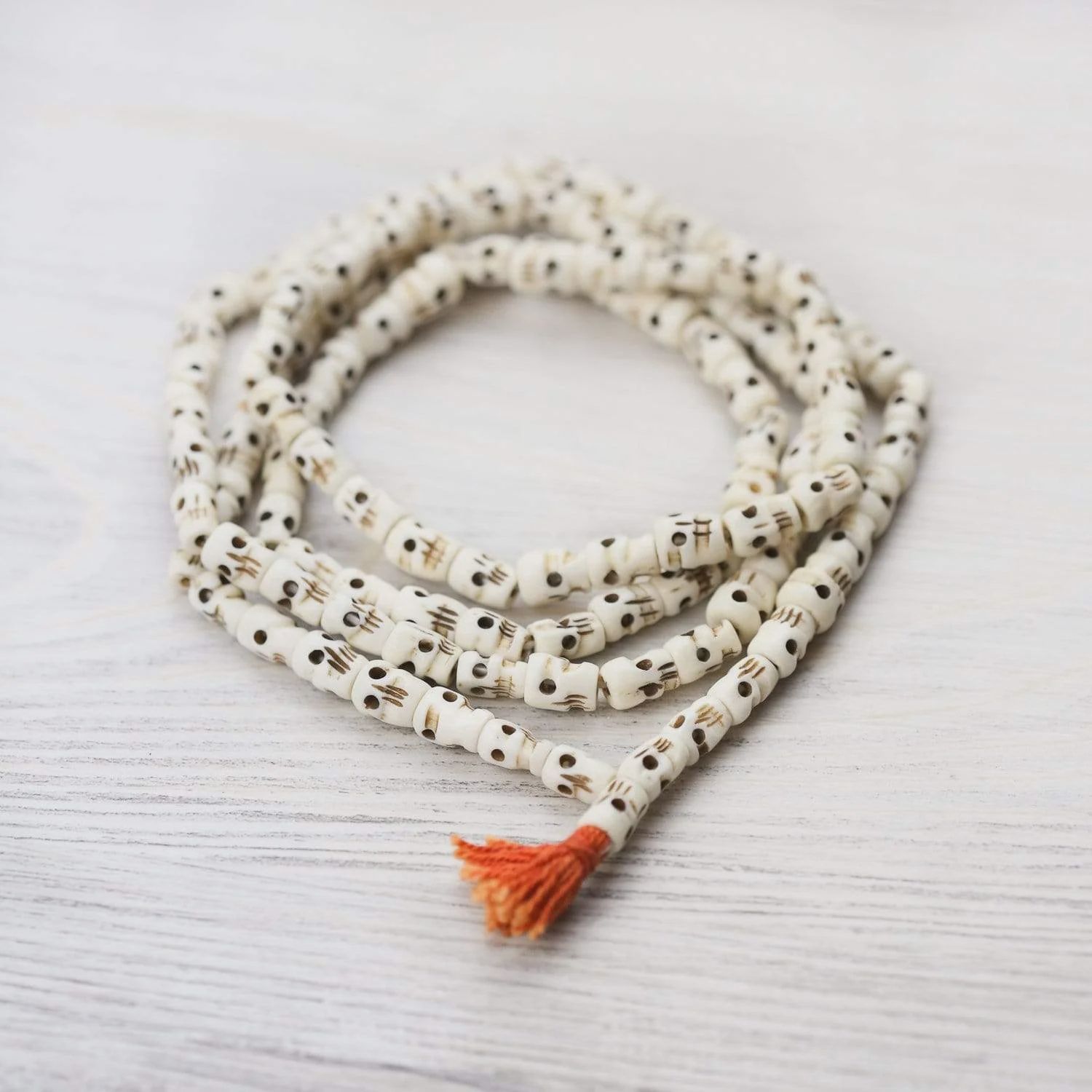
Skull mala
Share
$17.95
Buy and save
Buy and earn $0.35 Loyalty for your next purchase
Loyalty is a discount program that lets you buy products and earn points to redeem on your next purchase. Your Loyalty balance is updated when you pay online or in-store. The Loyalty amount shown on this page can be recalculated at the checkout.
In stock: 7 available
1
Have questions?
Skull mala
Share
Product details
Weight: 0.11 lbs
A skull mala is a sacred 108-bead necklace, most often made from carved yak or water buffalo bone. Historically it would sometimes be carved from human bone. It has a long historu of use in Tibetan Buddhism and Hinduism. These beads symbolize mortality and the fleeting nature of existence, encouraging mindfulness, while also representing liberation and divine power in certain Tantric traditions, particularly for devotees of Goddess Kali.
In addition to the sybolism of the impermanence of life, these beads are also used to symbolize:
Liberation & Wisdom: In Hinduism, they are linked to Goddess Kali and Shiva, symbolizing liberation from the cycle of rebirth and ultimate knowledge.
Spiritual Offering: Human bone malas are often made from donated remains, turning a selfless act of giving into a tool for spiritual practice, supporting monastic life.
Tantric Practice: Used in Tantra by practitioners dedicated to deities like Kali, emphasizing transformation and embracing the cycle of life and death.
This mala is used as many others are, to track prayers, chants, or mantras spoken once for each bead, or108 times.
In Hinduism it is often worn by fearsome aspects of the Divine Mother (Kali) and Lord Shiva (as Mundamala or Kapalamala) in paintings and statues.
In Tibetan Buddhism it is often seen in art being used by wrathful deities and practitioners to confront mortality and attain enlightenment.
Powered by Lightspeed
Display prices in:USD